My Journey towards Trianga Yoga
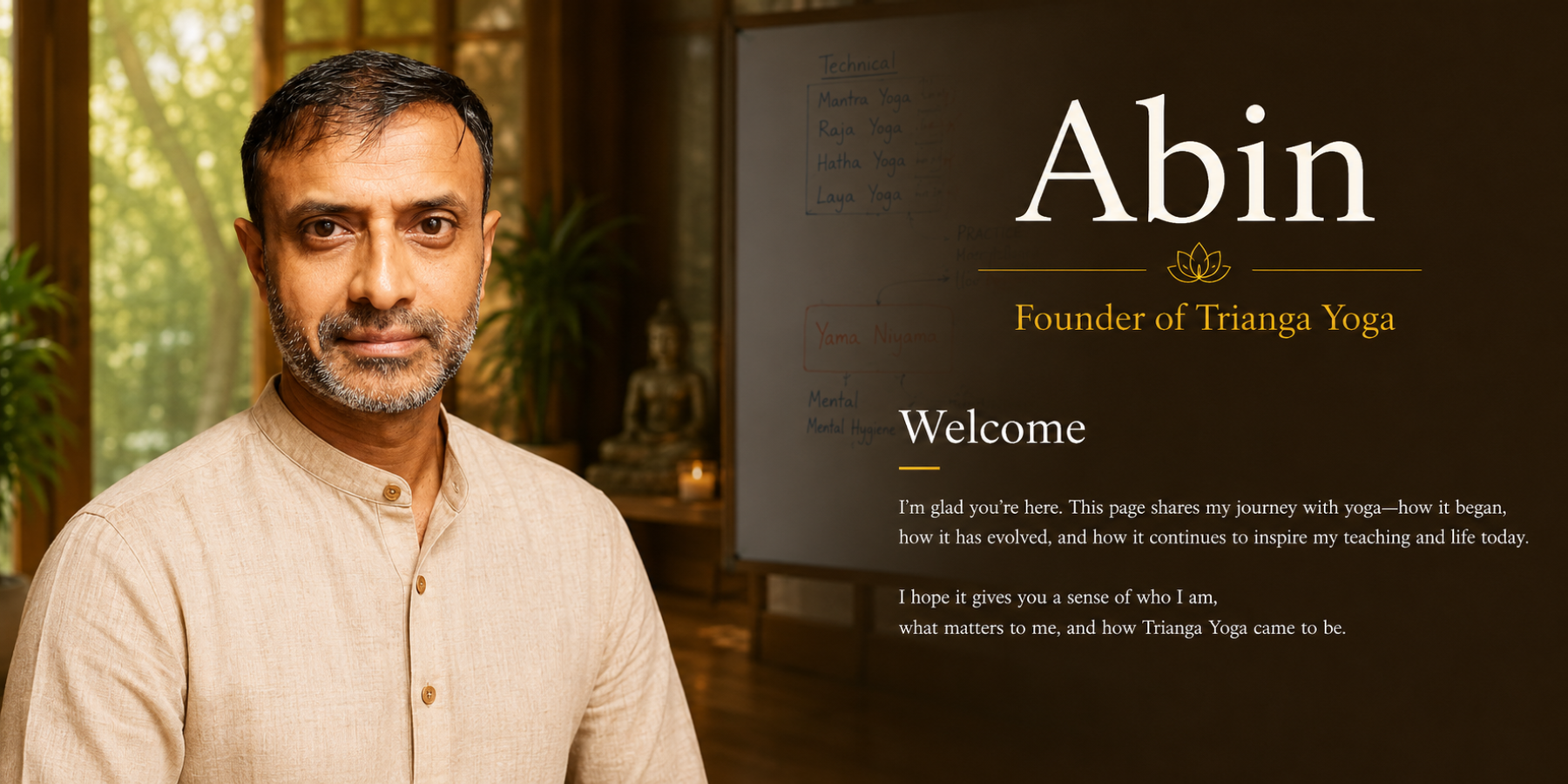
Welcome, and thank you for visiting Trianga Yoga.
Whether you’ve come to explore Trianga Yoga, learn more about the immersion programmes, deepen your understanding of yoga, or simply satisfy your curiosity, I’m delighted you’re here.
My journey with yoga began more than thirty-five years ago, not merely as the practice of āsana, but as a lifelong exploration of philosophy, spirituality, breath, movement, and self-understanding. Over the decades, that journey has taken me through diverse traditions of Hatha Yoga, Tantra, Kriya Yoga, and classical philosophy, while also leading me to study functional anatomy and the science of human movement.
Trianga Yoga has grown naturally from these experiences. It is my attempt to bring together the wisdom of the classical tradition with a thoughtful, contemporary understanding of practice — integrating body, prāna, and mind into a single, coherent path of yoga.
I hope this website offers not only information about Trianga Yoga, but also a place to discover, question, practise, and perhaps see yoga from a fresh perspective. Thank you for being here, and I look forward to sharing this journey with you.

The First Steps
My practical journey into yoga began during my teenage years in Kolkata, where I learnt āsana through traditions influenced by Bishnu Ghosh — the brother of Paramahansa Yogānanda and teacher of Bikram Choudhury — as well as the lineage of Swami Shivānanda of Kāmākhya.
However, growing up in Bengal — a region deeply associated with Hatha Yoga, Kriya Yoga, Shākta Tantra, and the Bhakti tradition of Shri Chaitanya — I was naturally drawn to its rich spiritual heritage. During my school years, the writings of Swāmi Vivekānanda awakened a deep interest in Advaita Vedānta and inspired me to explore yoga as a path of self-discovery rather than merely physical exercise.
This interest in understanding yoga as a complete path was reinforced by one statement of Swāmi Vivekānanda that left a lasting impression on me: “Body and mind must run parallel.” I continued exploring different approaches to āsana beyond the Ghosh style, spending time at the Bihar School of Yoga in Munger and, in 2005, attending Ashtanga Vinyasa classes in Delhi when the method was still largely unknown in India. Alongside these, I studied other streams of classical Hatha Yoga, gradually integrating their most valuable principles into my own practice.
My spiritual journey evolved alongside my physical practice. In 1998, I was initiated into the Shākta Kaula tradition, opening the door to an ongoing study of Shākta Tantra, mantra, rituals, etc. In 2005, I was initiated into Kriyā Yoga in the lineage of Shri Panchānan Bhattāchārya, one of the foremost disciples of Shri Shyāmācharan Lāhiri. This initiation led me to explore the deeper philosophical foundations of yoga, viz., Sāṃkhya, the Yoga Sūtra, and the yogic interpretations of the Bhagavad Gītā.
Both these traditions continue to shape my understanding of yoga as a path of inner transformation grounded in direct experience.
Sharing the Journey
By the early 2000s, yoga had become far more than a personal practice — it had become a calling. In 2004, I left my job to teach yoga full-time. Over the next four years, I taught regular classes and conducted workshops across a variety of settings. Yet I gradually realised that something was missing.
While I found great joy in teaching āsana, opportunities to share the philosophical and spiritual dimensions of yoga were few. I increasingly felt that I was presenting only one part of a tradition whose true richness lay in the integration of body, breath, mind, and self-inquiry.
Eventually, I stepped away from full-time teaching because I felt I could not yet teach yoga in the complete way I had envisioned. I spent the next few years teaching mathematics to GRE and GMAT students before returning to the corporate sector in Process Excellence and Analytics.
Looking back, those years were not a departure from yoga. They gave me the opportunity to deepen my personal practice and continue studying Vedānta, Sāṃkhya, the Yoga Sūtra, the Bhagavad Gītā, and Tantra while maintaining a consistent āsana practice.
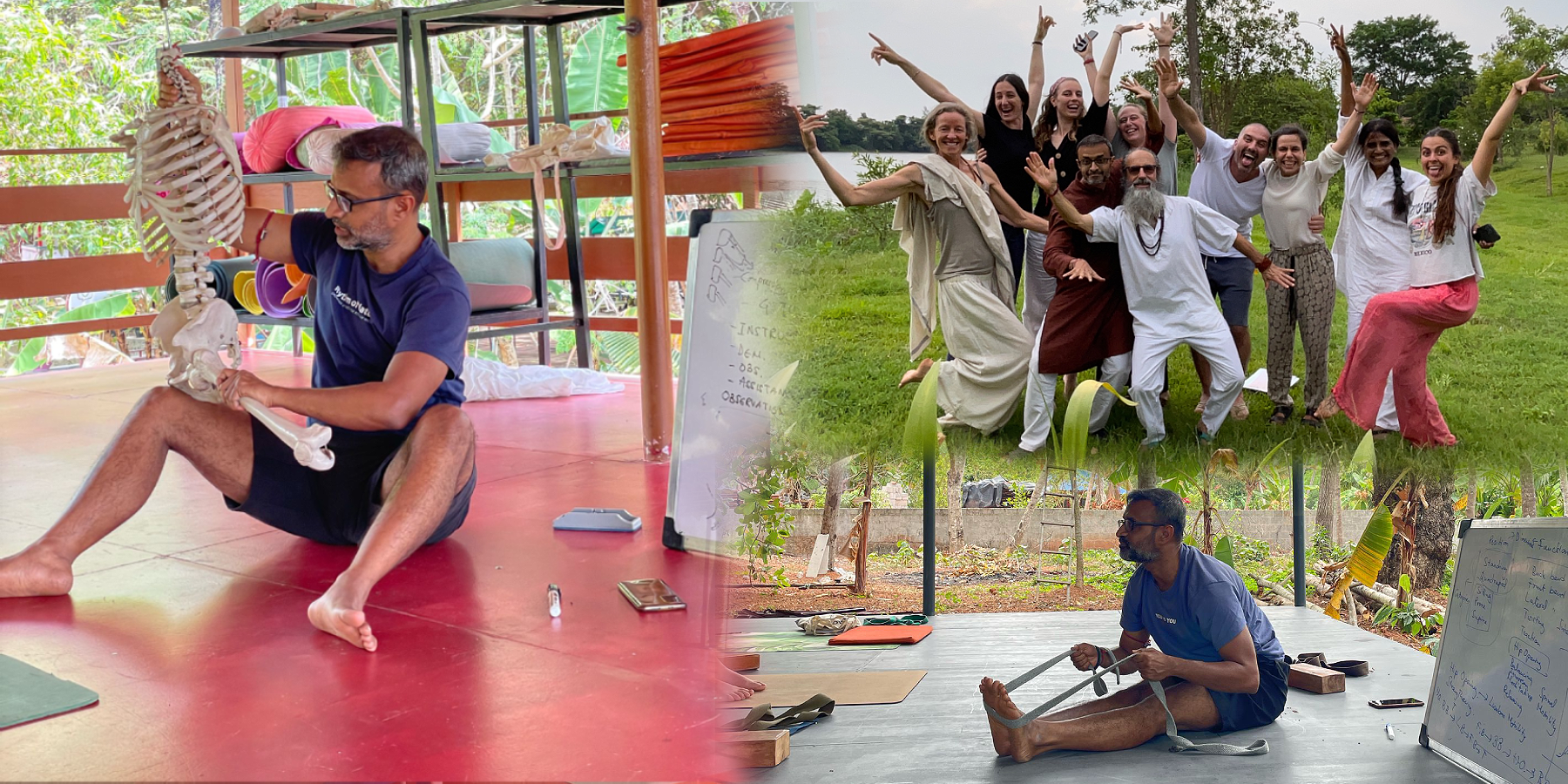
A significant turning point came in 2015 when I suffered a herniated disc. Recovering from that experience transformed my approach to practice, leading me to observe more carefully how the body responds to movement, posture, breath, effort, and recovery. It also inspired a systematic study of functional anatomy, which has since become an integral part of my teaching.
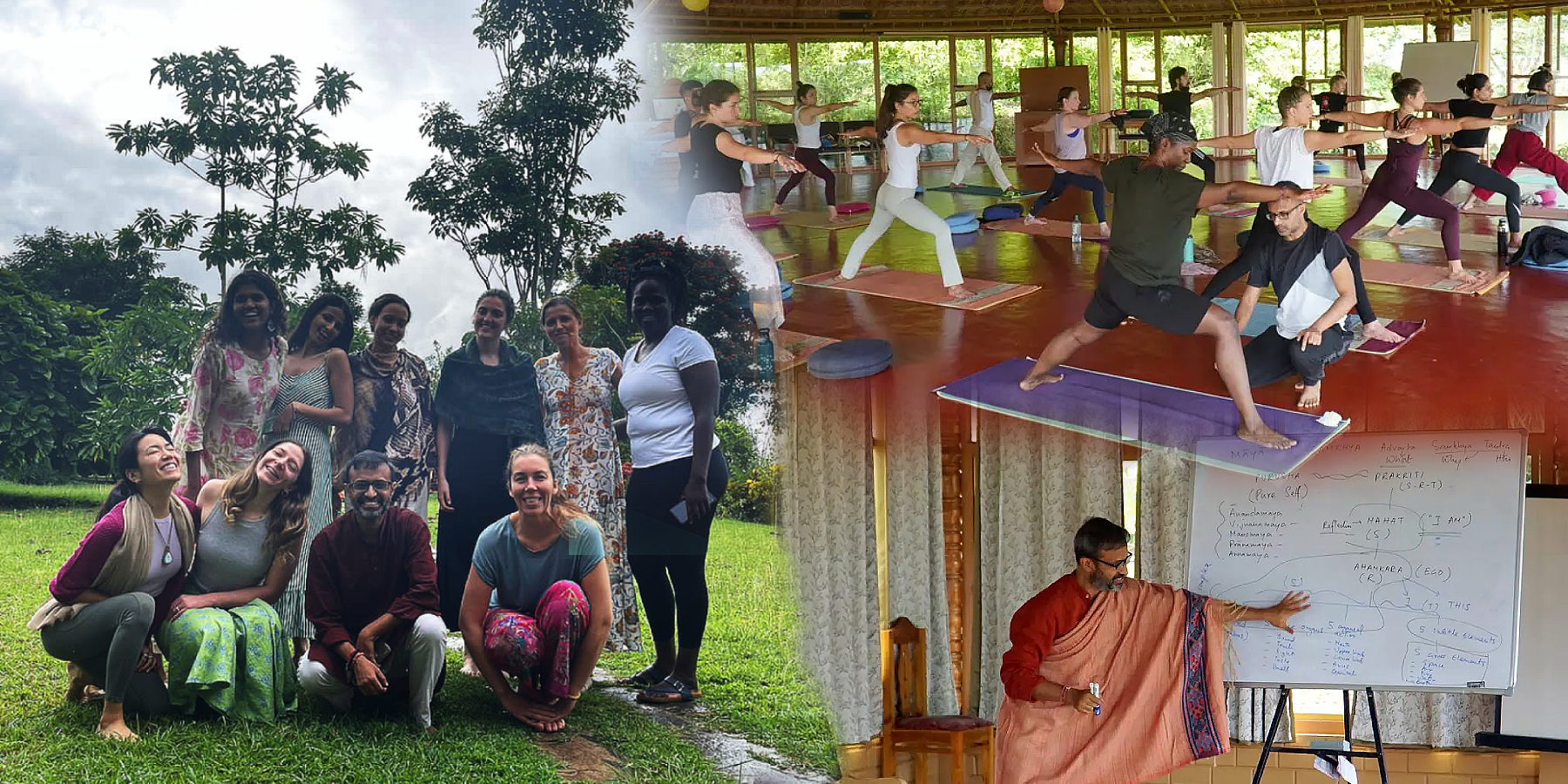
In 2022, after a decade in the corporate sector, I returned to yoga teaching with a renewed sense of purpose. I completed my 200-hour Yoga Teacher Training Course that year and began teaching immediately. The following year, I completed a 300-hour advanced teacher training, which further deepened my āsana practice and refined my understanding of alignment. These two trainings marked an important stage in my return to teaching and helped bring together the experience, study, and personal practice that had developed over the preceding years.
An Integrated Vision of Yoga
Modern yoga is often presented in fragments. Some approaches emphasise physical postures, others breathwork, meditation, philosophy, or devotion. While each offers genuine value, they can unintentionally suggest that yoga consists of separate disciplines rather than one integrated tradition.
The classical teachings present a different picture, consistently pointing towards integration rather than separation. I found it difficult to separate one aspect of yoga from another, and wanted to teach yoga in the same integrated way that had shaped my own understanding.
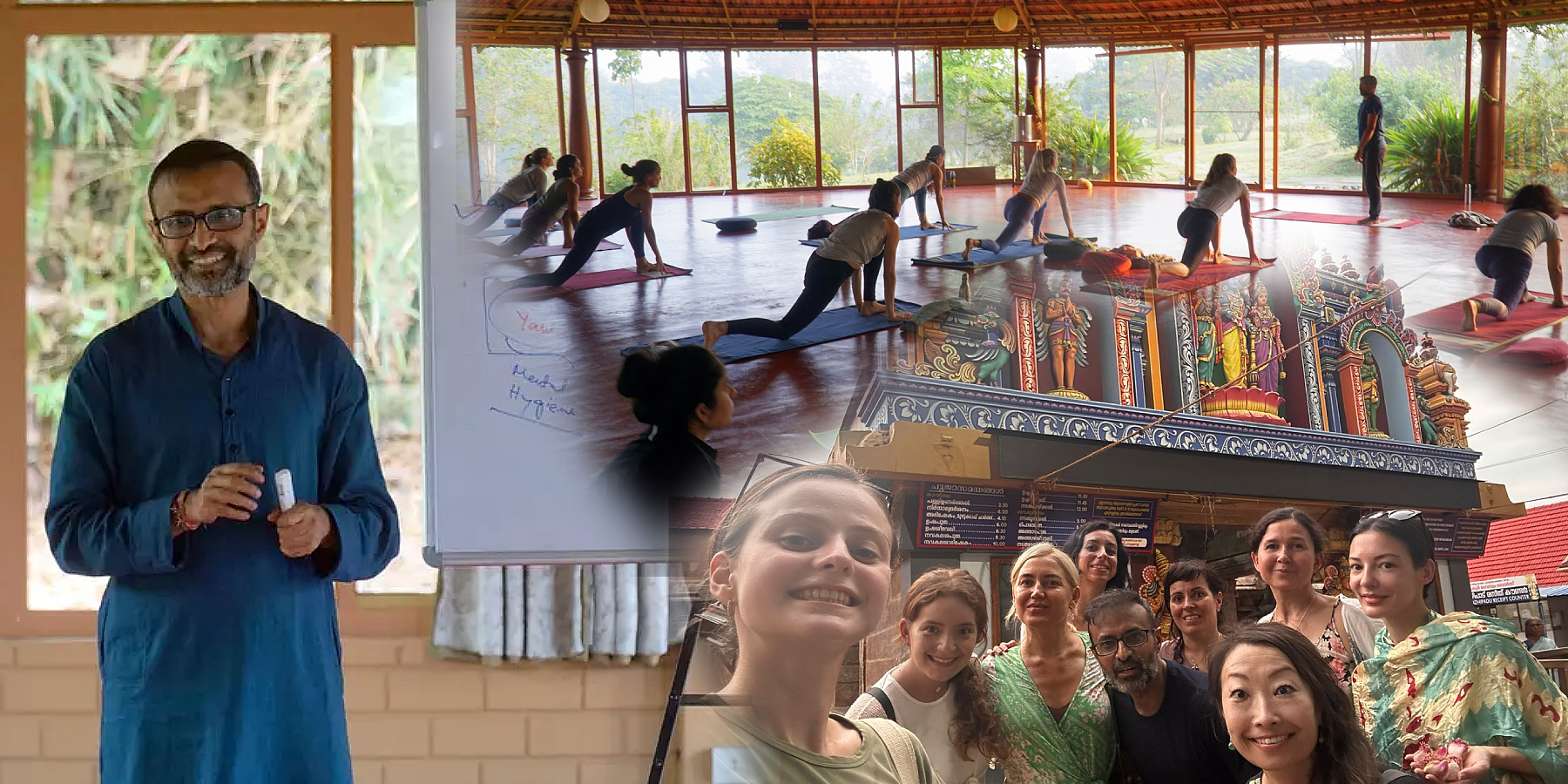
This perspective gradually evolved into Trianga Yoga. My intention is to organise the breadth of the tradition into three complementary dimensions that remain faithful to its classical foundations: Kāya Yoga cultivates the body through intelligent movement and functional alignment of āsanas; Prāṇa Yoga refines and directs the vital force through Hatha-Kundalini Yoga; and Mano-Yoga transforms the mind through mantra, devotion, contemplation, and the philosophical traditions of yoga and tantra.
Although these three dimensions may be explored individually, they ultimately support one another. Together, they reflect the principle that first inspired my own journey decades ago — “Body and mind must run parallel.” Trianga Yoga is my attempt to honour that vision through an integrated path in which body, prāna, and mind evolve together.
An Invitation
Yoga has been one of my greatest teachers, and I continue to approach it with the same curiosity and humility that first drew me to it decades ago. Over the past four years of teaching, I have also come to realise that learning does not flow in only one direction. Every class, workshop, teacher training, and conversation with my students has challenged me to reflect more deeply, refine my understanding, and continue growing. For that, I am deeply grateful to every student who has been part of this journey.
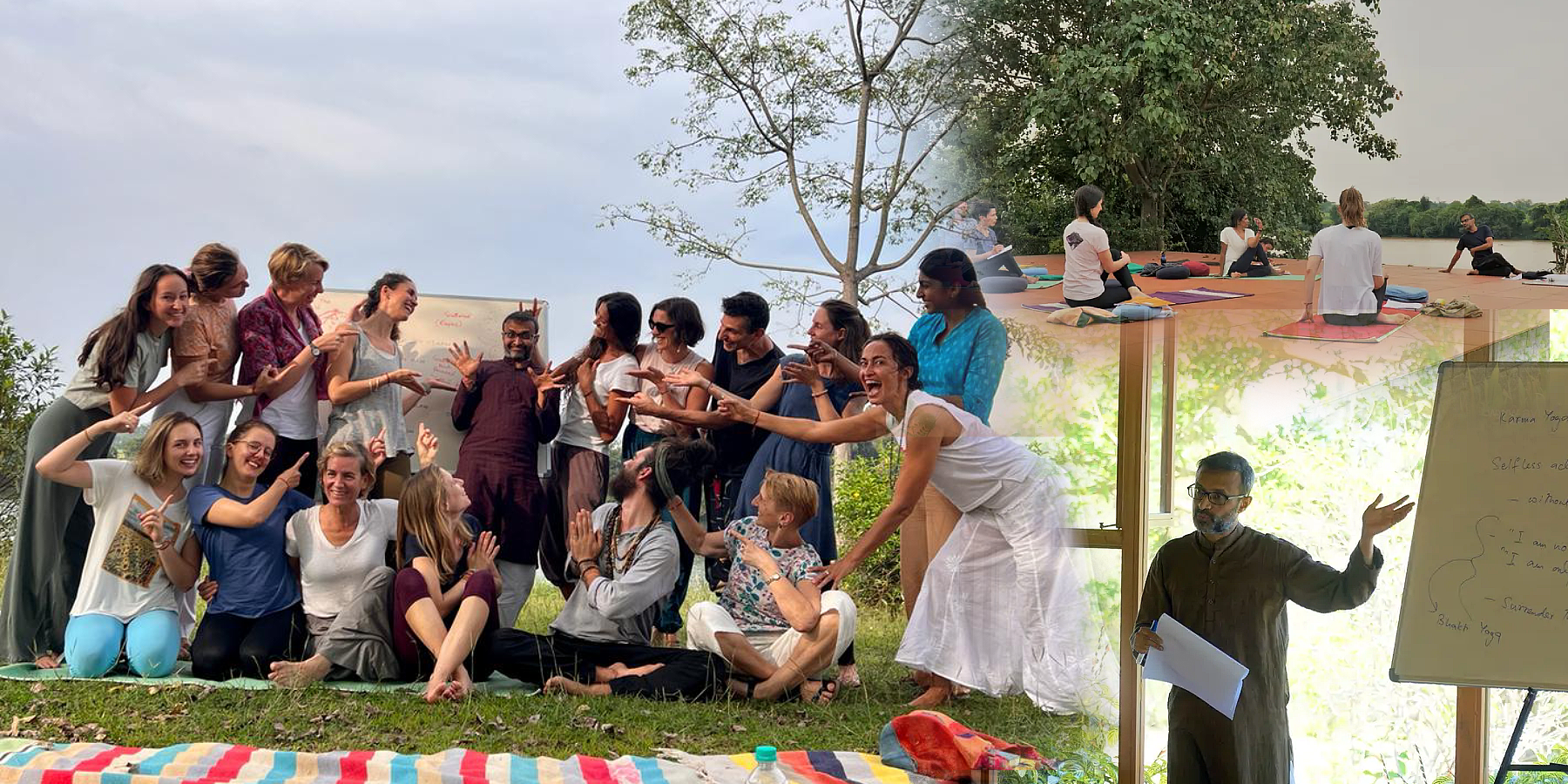
If what you’ve read has sparked your curiosity, there’s much more to discover throughout the website. You can explore the three angas of Trianga Yoga, learn about the immersion programmes, or attend a class or workshop. Whatever aspect of yoga draws your interest — āsana, prānāyāma, philosophy, tantra, or the integrated path of Trianga Yoga — I hope our paths cross in the future.