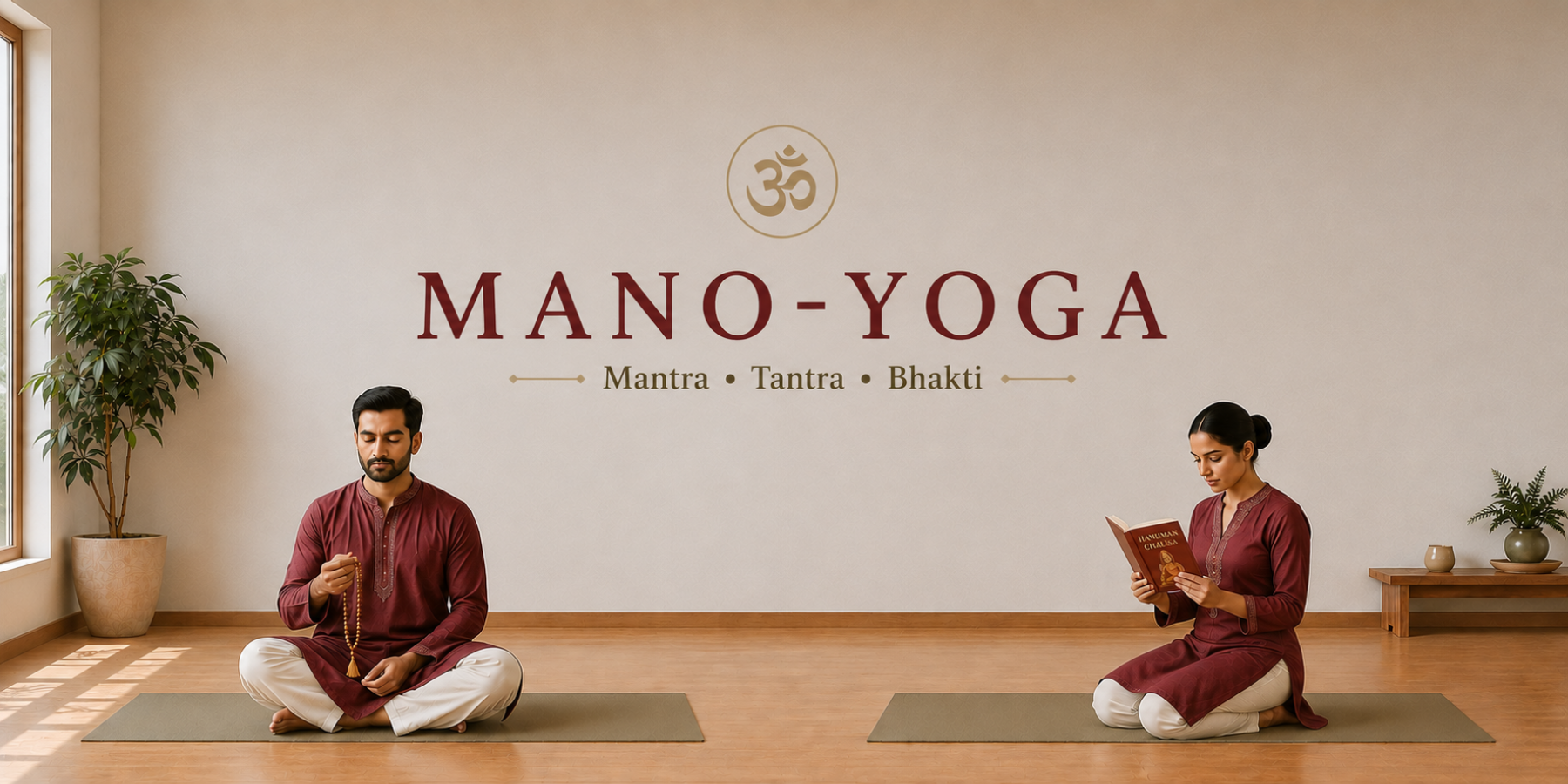
Mano-Yoga
Mantra • Tantra • Bhakti
Mantra • Tantra • Bhakti
Mano-Yoga is Trianga Yoga’s path of Mantra Yoga, where the wisdom of Tantra meets the heart of Bhakti. Through sacred mantra, ritual, contemplation, and devotion, it seeks not merely to cultivate knowledge, but to transform the mind into an instrument of surrender, clarity, and inner awakening.
While intellectual understanding and yogic disciplines provide an essential foundation, they become truly transformative only when the heart is awakened through devotion. As the third anga of Trianga Yoga, Mano-Yoga works directly with the mind, emotions, and consciousness, guiding the practitioner toward a deeper relationship with the sacred dimensions of existence.

Why Mano-Yoga?
The mind can be our greatest ally or our greatest source of distraction, confusion, and suffering. While physical practice strengthens the body and prāṇic disciplines refine the vital force, lasting transformation requires the cultivation of the mind and heart.
Mano-Yoga offers a traditional path for this inner refinement through the integrated practices of Mantra Yoga, Tantra, and Bhakti. Rather than suppressing the mind, it seeks to purify, sanctify, and redirect it toward devotion, clarity, and spiritual awakening. In doing so, it cultivates a deeper recognition of the Divine within oneself and throughout all existence.
Tantric Ritual and Contemplative Practices
Mano-Yoga employs a series of traditional practices that gradually prepare the practitioner for mantra, meditation, and inner worship. Before engaging in japa (mantra repetition), preparatory disciplines establish physical, energetic, and psychological readiness, helping shift awareness from ordinary consciousness to a sacred state of presence.
Āchmana purifies the practitioner through mindful ritual and sacred mantras, while Āsana Shuddhi sanctifies the place of practice and establishes a stable foundation for worship. Nyāsa consecrates the body by placing mantras within different parts of it, cultivating awareness of the body as a sacred vessel. Bhuta Shuddhi, the purification of the elements, uses contemplative visualization to dissolve and reintegrate the elemental constituents of the body, gradually loosening identification with the physical form and preparing the mind for deeper spiritual practice.
These preparatory disciplines naturally culminate in Mānasa Pujā (mental worship), one of the most refined practices of Mano-Yoga. Rather than relying solely on external ritual, the practitioner performs the entire act of worship inwardly through visualization, devotion, and concentrated awareness. The deity is invoked within, offerings are made mentally, and every aspect of the ritual becomes an expression of contemplative devotion. Through regular practice, the mind becomes increasingly focused, purified, and receptive to higher states of consciousness, gradually transforming ordinary thought into an act of worship and continuous remembrance of the Divine.
Mantra Japa
Mantra Japa or chanting of a meditative mantra is the central practice of Mano-Yoga. A mantra is not merely a sacred sound or phrase, but a vehicle of consciousness that carries transformative spiritual power. Through its repeated recitation with devotion, awareness, and proper intention, the practitioner gradually refines the mind, deepens concentration, and cultivates an intimate relationship with the divine presence embodied within the mantra.
Japa may be practised aloud, in a whisper, or silently within the mind, each stage leading to progressively subtler levels of awareness. With regular practice, mental distractions begin to subside, the emotions become more balanced, and an unbroken current of remembrance gradually develops. Over time, the mantra ceases to be something that is merely repeated; it becomes a living presence that supports meditation, devotion, and the continual transformation of consciousness.
Stotra Chanting
Alongside Mantra Japa, Mano-Yoga incorporates the chanting of Stotras—sacred hymns that express devotion, reverence, and spiritual aspiration. Addressed to various manifestations of the Divine, these hymns convey profound philosophical insights through poetic language, symbolism, and devotional praise.
More than a vocal practice, Stotra chanting engages both the intellect and the heart. As practitioners reflect upon the qualities, virtues, and teachings embodied by the deity being praised, devotion deepens and spiritual understanding gradually matures. Through regular recitation, the mind becomes imbued with uplifting impressions, devotional feeling is strengthened, and a deeper appreciation of the sacred traditions of Yoga and Tantra naturally unfolds.
Philosophical Study
The practical disciplines of Mano-Yoga are supported by the study of philosophical and devotional teachings that provide context, meaning, and direction to spiritual practice. While mantra, ritual, and worship cultivate direct experience, philosophical inquiry helps the practitioner understand the principles that underlie these practices and integrate them into daily life.
The curriculum explores the path of Bhakti Yoga, highlighting the transformative role of devotion, surrender, and divine love in spiritual growth. Students also study the symbolism and significance of Tantric Gods and Goddesses, including divine couples such as Brahmā–Sarasvati, Vishṇu–Lakshmī, and Shiva–Shakti, not merely as objects of worship but as symbolic expressions of universal principles operating within consciousness and creation. Additional study includes selected teachings from Shākta Tantra, the Bhagavad-Gitā, and the traditional understanding of the Guru as the guide who facilitates inner transformation and spiritual awakening. Together, these teachings provide a coherent framework for understanding the mind, devotion, consciousness, and the sacred dimensions of existence.
Practice
The practical disciplines of Mano-Yoga cultivate devotion, concentration, and inner transformation through the integrated paths of Mantra Yoga, Tantra, and Bhakti. Beginning with traditional preparatory rites and culminating in mantra, worship, and sacred chanting, these practices gradually refine the mind, awaken the heart, and establish a deeper relationship with the Divine. Practices include:
- Āchmana (ritual purification)
- Āsana Shuddhi (sanctification of the place of practice)
- Nyāsa (installation of mantras within the body)
- Bhuta Shuddhi (purification of the elements)
- Mānasa Pujā (mental worship)
- Mantra Japa (mantra meditation)
- Stotra Chanting (sacred hymns and devotional recitation)
Study
The study component of Mano-Yoga provides the philosophical and symbolic foundation for its practices. By exploring the teachings of Bhakti, Tantra, and the sacred traditions of Yoga, students gain a deeper understanding of the principles that shape devotion, ritual, mantra, and the transformation of consciousness. Topics include:
- Bhakti Yoga: Understanding Bhakti beyond Kirtan
- Tantric Gods and Goddesses: symbolism and spiritual significance
- Shākta Tantra and Dasha Mahavidya: selected teachings and philosophy
- Bhagavad-Gitā: devotion, action, and self-realisation
- Guru Tattva: the role of the Guru in spiritual transformation
Who is Mano-Yoga For?
Mano-Yoga is intended for sincere seekers who are naturally drawn toward mantra, devotion, contemplation, and the inner dimensions of Yoga. It is especially suited to those who wish to cultivate a deeper relationship with the sacred through the integrated paths of Mantra Yoga, Tantra, and Bhakti.
Within Trianga Yoga, Mano-Yoga represents the culmination of a progressive journey. For this reason, its teachings are offered only to students who have first completed the study and practice of Prāṇa Yoga. The disciplines of breath, prāṇa, concentration, and subtle awareness cultivated through Prāṇa Yoga provide the essential foundation upon which the practices of Mano-Yoga can be meaningfully understood and safely undertaken.
Mano-Yoga Immersion
The Mano-Yoga Immersion is intended for practitioners who have completed the study and practice of Prāṇa Yoga and wish to continue their journey into the devotional and contemplative dimensions of Yoga. Building upon the foundation of breath, prāṇa, concentration, and subtle awareness cultivated in Prāṇa Yoga, this immersion explores the transformative disciplines of Mantra Yoga, Tantra, and Bhakti through traditional practice, philosophical study, and guided contemplation.
The Mano-Yoga Immersion page provides further information about the curriculum, schedule, and prerequisites.